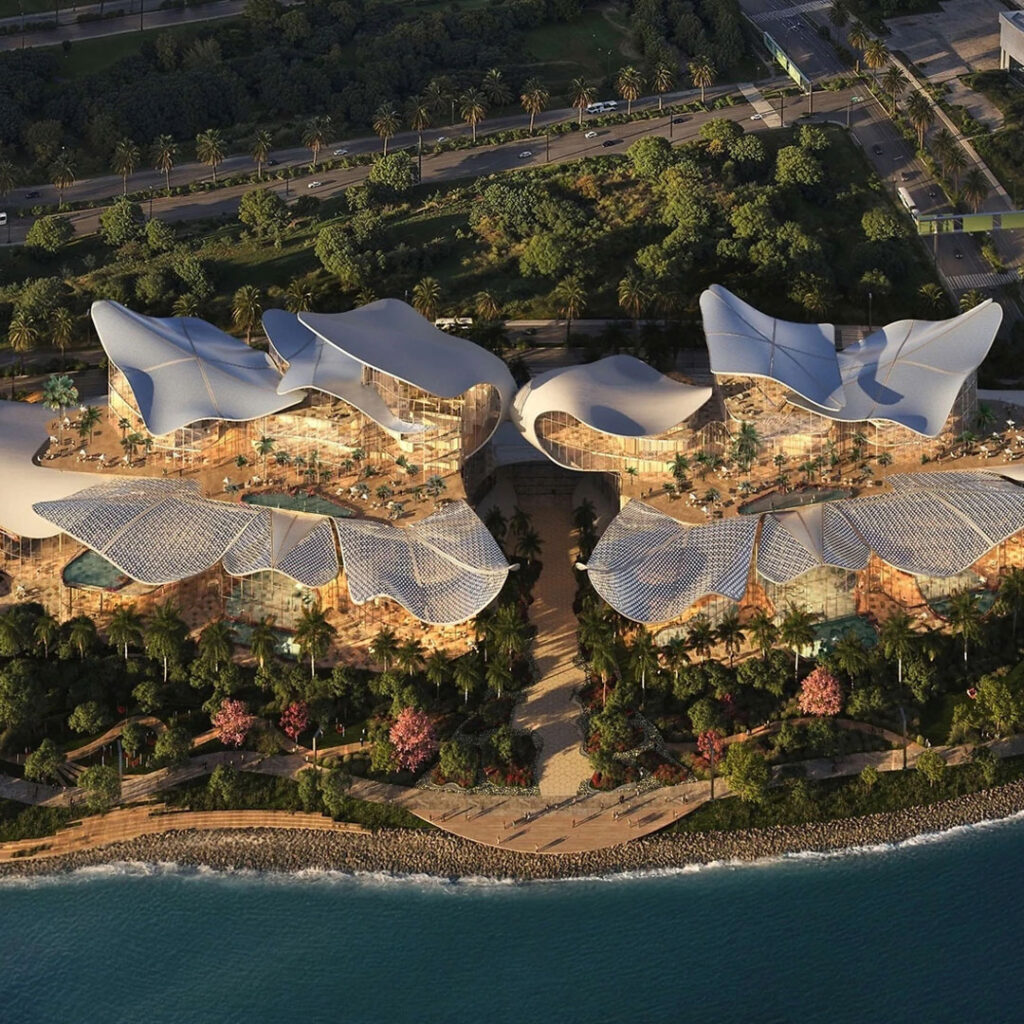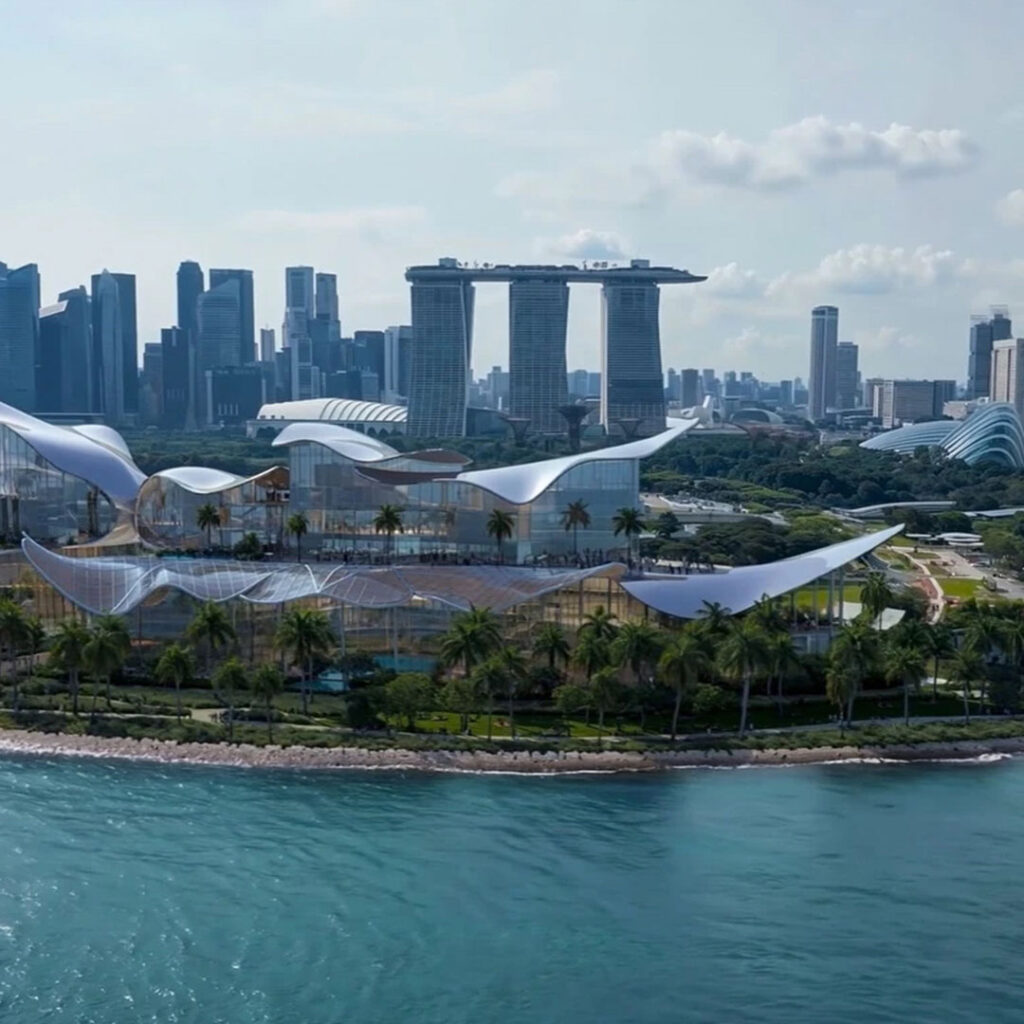

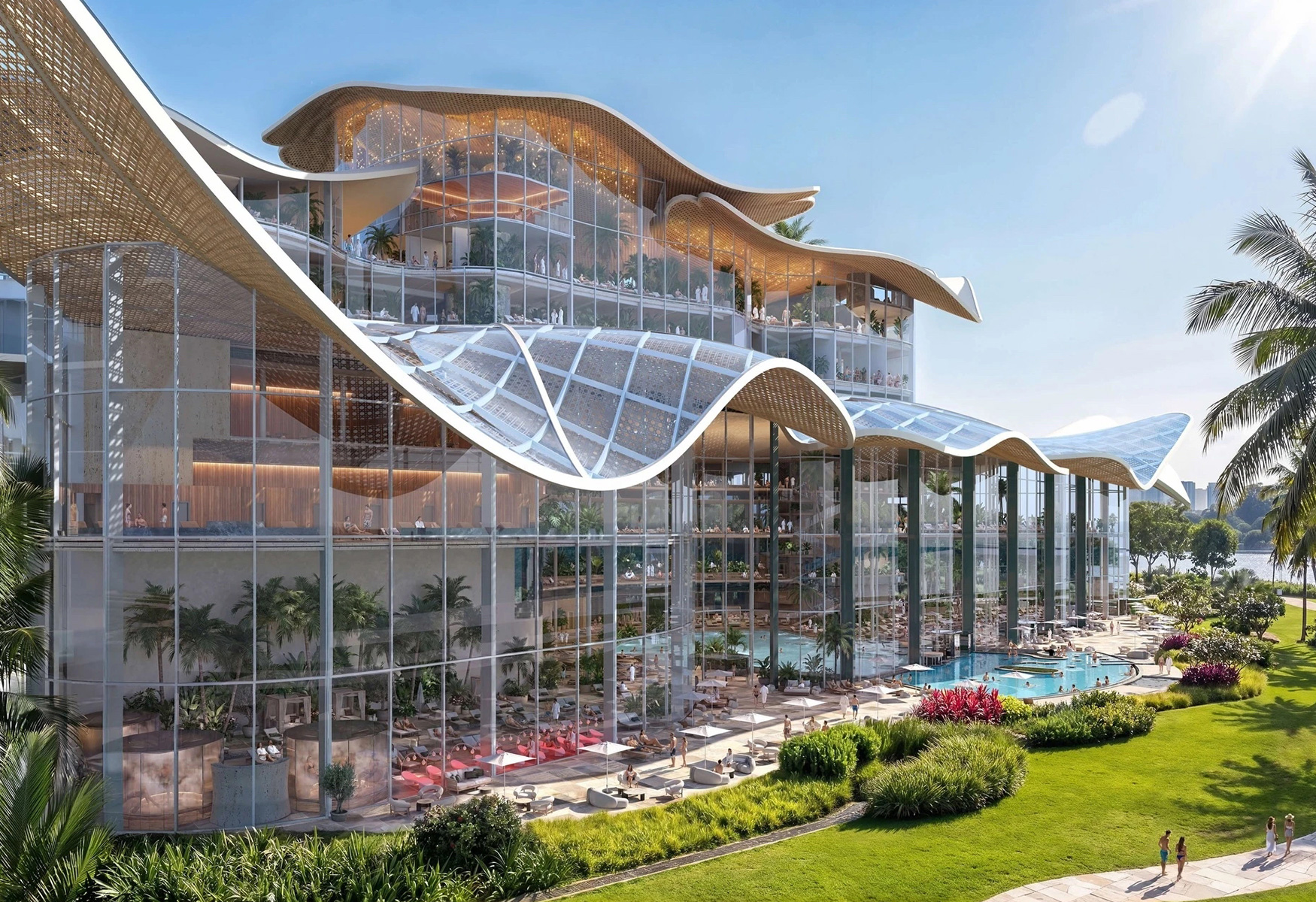
Singapore’s wellness landscape is set to welcome a major new addition with the arrival of Therme Singapore, a sprawling integrated wellbeing destination slated to open at Marina South in 2030. Developed by Therme Group in partnership with Kajima Overseas Asia and DP Architects, the seven-storey development will span more than 720,000 sq ft — roughly equivalent to nine football fields — and is poised to become Asia’s first large-scale integrated wellbeing destination. Designed as a “third place” between home and work, Therme Singapore aims to make wellness more accessible by combining recreation, relaxation, and rejuvenation under one roof.
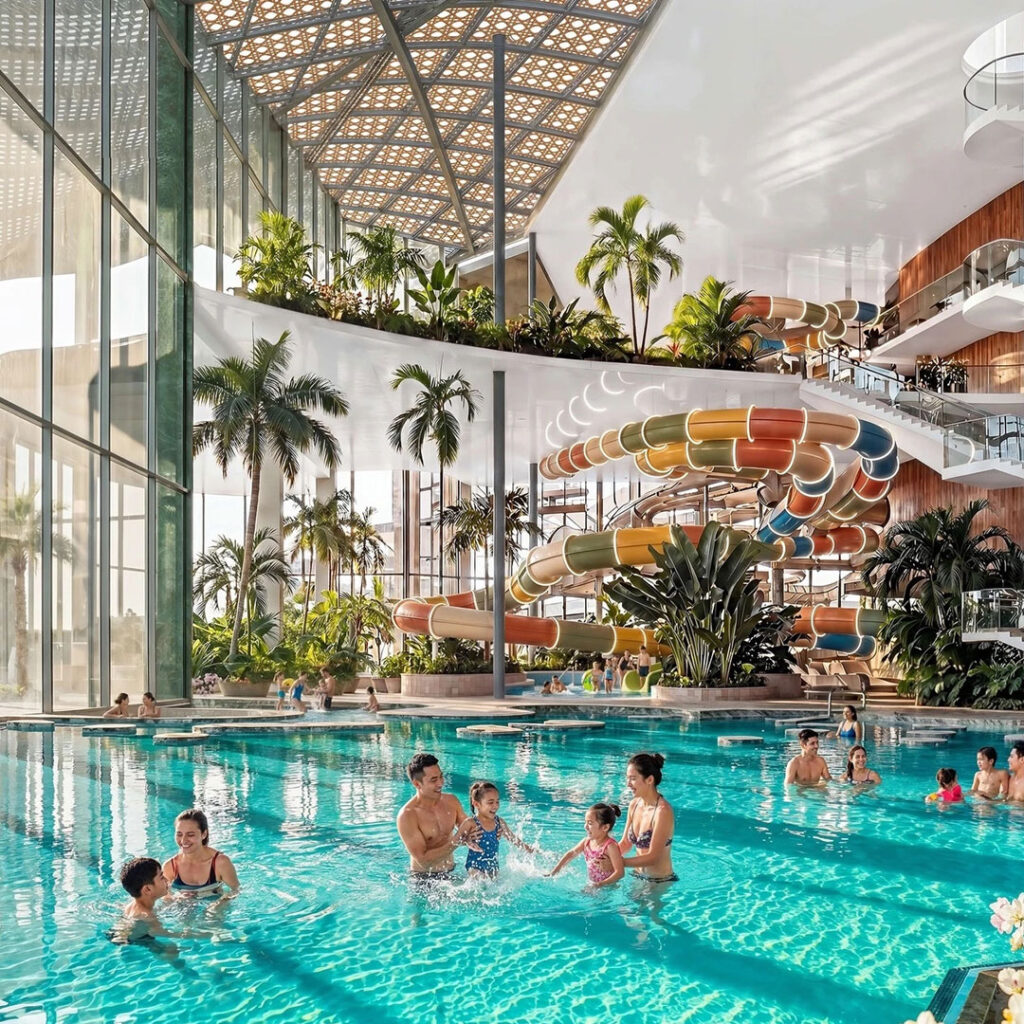
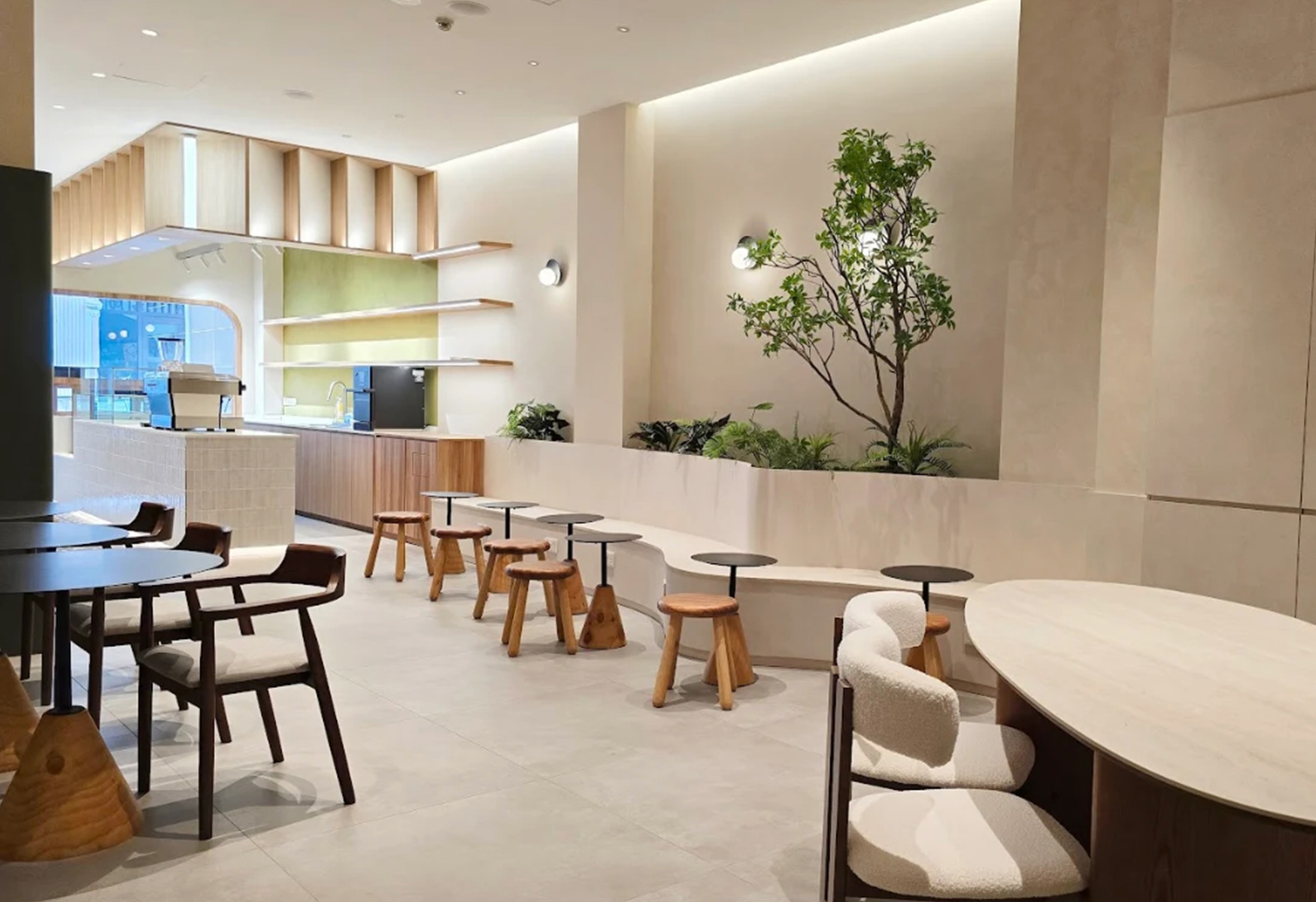
The expansive destination will be organised into three distinct zones: Play, Relax, and Restore. The family-friendly Play zone will feature interactive water attractions, children’s pools, and an impressive collection of waterslides stretching a combined 1.8 kilometres. For those seeking a slower pace, the adults-only Relax zone will offer thermal pools, therapeutic mineral baths, hydromassage facilities, and infrared therapy spaces designed for rest and unwinding. The Restore zone takes the wellness experience a step further with saunas, steam rooms, and more than 70 treatment spaces dedicated to physical and mental rejuvenation. Complementing these experiences will be extensive dining and social spaces, many of which will overlook the waterfront.
Beyond its indoor attractions, Therme Singapore will also introduce a significant green space to Marina South. More than 200,000 plants representing over 200 species, including orchids and native Southeast Asian flora, will be incorporated throughout the development, while a new four-hectare coastal park will connect the site to Marina Barrage. The attraction will further integrate technology-driven conveniences such as RFID wristbands for cashless payments and locker access, alongside robotic storage systems and advanced water filtration technology. Sustainability has also been embedded into the project’s design, with energy-efficient systems, solar panels, smart irrigation, and climate-responsive landscaping forming key components of the development.