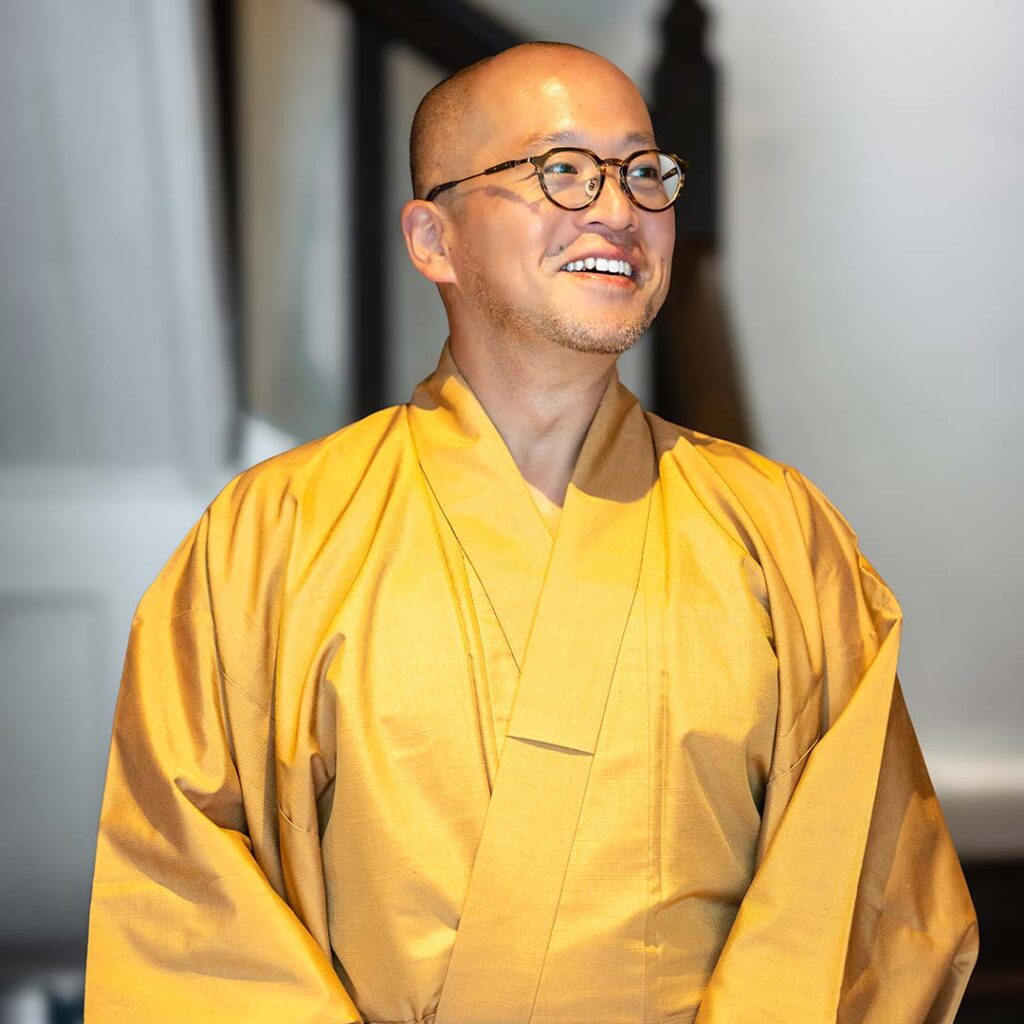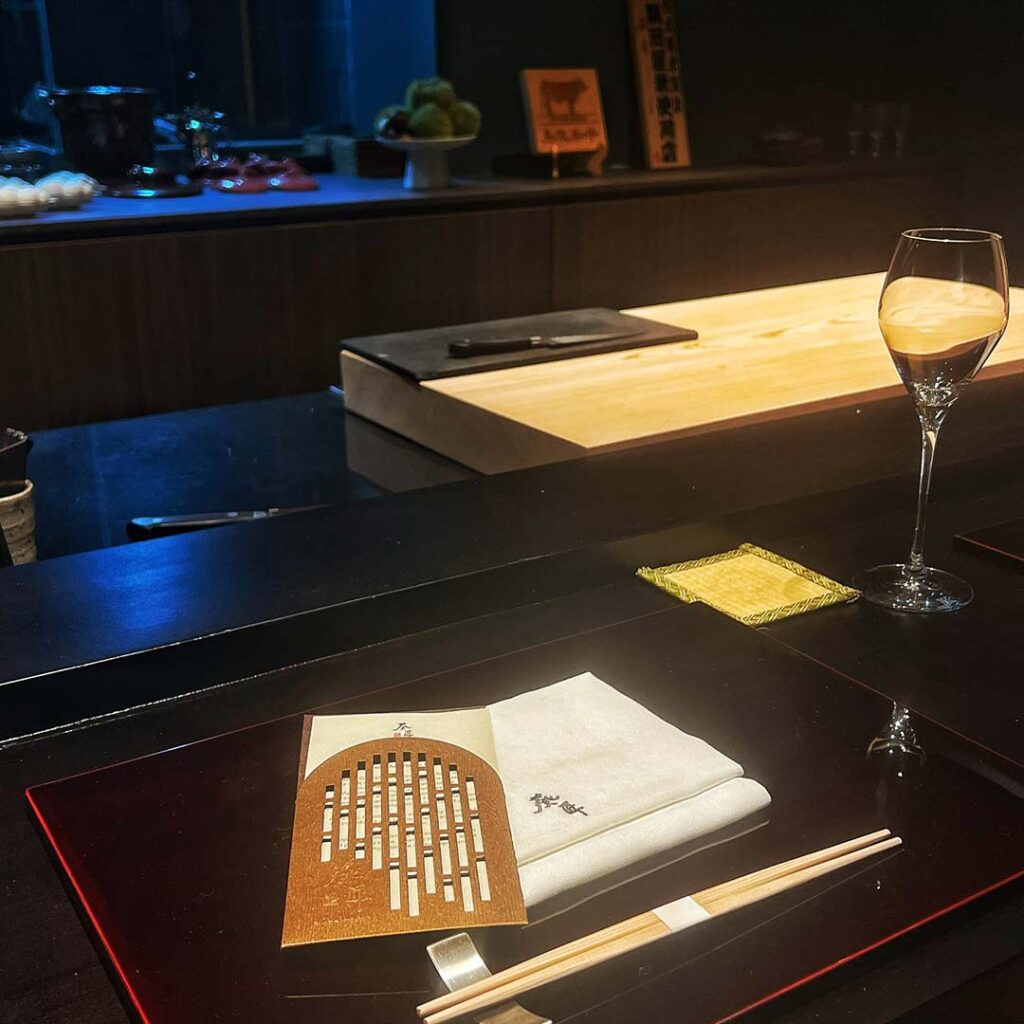

At Ki-sho 葵匠, the act of cooking is interpreted not as a repetition, but as renewal (甦) – a ritual of emotion and material transformation. The 11-seater kappo-style omakase restaurant with a private room for 8 pax, is now born again under the skillful hands of Chef Taro Takayama, presents a brand new team, as well as a brand new menu in which he reminisces his childhood favourites. Chef Takayama, with more than a decade of experience under his belt, served as the private chef to the Japanese Ambassador, and led his eponymous omakase restaurant, Takayama.
Ki-sho 葵匠 also welcomes sommelier Joel Lim, another veteran in the industry with stints in various Michelin-starred establishments and a sought-after judge in his field. He presents an extensive wine list as well as curated sakes at below retail prices for special allocation bottles.
A Showcase of Japan’s Finest
Kappo, which means to “cut and cook”, is a multi-course meal of seasonal ingredients decided entirely by the chef. It brings the refinements of kaiseki but with a more intimacy, as diners are treated to an up-close culinary performance by the chef, who prepares the dishes before their eyes, at the counter.
Chef Takayama is a master at this craft, himself having grown up in the Kansai region, where this more interactive and personal style of upclass Japanese cuisine originated from. For Ki-sho 葵匠, he presents a brand new menu with his signatures, reminiscent of his childhood favourites while encompassing Japan’s finest. His deep understanding of nature’s bounty began at a young age. Born in a small town in Wakayama, he grew up surrounded by the plentiful sea and mountains, picking vegetables as a boy, and passing through the forest on the way to his grandmother’s home at the foot of the sacred Mount Koya.
Chef Takayama began his career at prestigious three-star Michelin restaurants in Osaka, including Kashiwaya and Koryu. In 2013, he was appointed Master Chef at the Japanese Ambassador’s residence in Singapore, serving celebrities and dignitaries like Crown Prince Naruhito and Prime Minister Shinzo Abe. In 2017, he started his eponymous restaurant in downtown Singapore, Takayama, which served Japanese kappo-style omakase – with subtle twists that stay within the boundaries of traditional Japanese cuisine yet both delight and surprise with their originality. Just as he is doing for Ki-sho, the multi-course menu, curated to exquisite perfection right before diners’ eyes, celebrates seasonal ingredients at the peak of their flavours Indeed, this is a delicious dance of authentic flavours and the meticulous simplicity of Japanese food, delivered with the heart of omotenashi and a dash of Chef Takayama’s own personality.
His menu at Ki-sho 葵匠 reflects the best of the season, changing with the colours of the leaves and in tune with the cycle of Mother Earth. Courses start from $160 for a 6-course lunch. This includes a seasonal appetiser platter, seasonal sashimi, choice of main (fish or add-on $30 for beef), donabe rice, and two desserts. Or go for the more luxurious 7-course menu at $280, which is available for both lunch and dinner. This includes dashi of the day, cold appetiser, sashimi, seasonal items, Tottori Wagyu or seasonal fish, donabe rice, and fruits. At dinner, you can also savour a 9-course meal at $360, featuring dashi of the day, a cold appetiser, sashimi of the day, seasonal items, a hot pot, a protein from land or sea, donabe rice, fruits and a financier to end on a sweet note.
Tottori Wagyu & Other Beloved Signatures
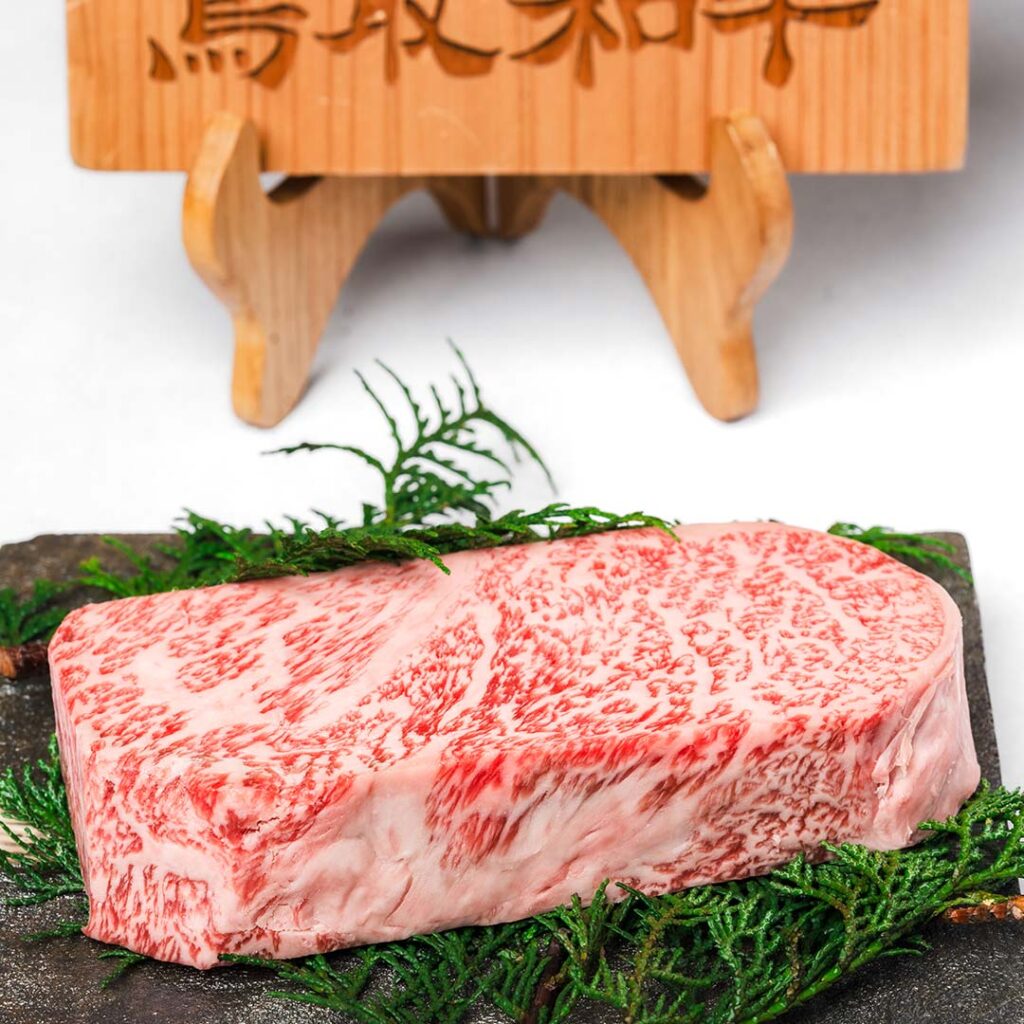
Of note is Chef Takayama’s protein course, which features the prized Tottori wagyu as an option. For the first time in Singapore, diners can try the specially imported wagyu beef from Tottori, in the wider Kansai area. This wagyu brand is known for its high quality, tenderness, and rich, umami flavour, due to the meat’s high oleic acid content that contributes to a melt-in-your-mouth sensation – a minimum of 55%. Tottori wagyu has also been recognised nationwide, winning the top prize for meat quality at the National Wagyu Competition in 2017.
However, what really sets Tottori wagyu apart from the rest is the role it played in the establishment of Japan’s prized beef. It was Tottori prefecture in 1920 that launched Japan’s first-ever registration program for wagyu cattle, and later the Wagyu Olympics in 1966 that Tottori itself won by a margin thanks to its bull Kedaka. Chef Takayama himself personally visited the farm in Tottori to observe the agricultural process, combined cattle raising system, integrating both the breeding and fattening process, to reduce the stress that the cows face.
Currently, over 85% of the total shipped cattle from the farm are in the topmost two A4 and A5 grades. They are of the heirloom Kedaka bloodline from Tottori, and now from which many of Japan’s top wagyu brands are bred. In Singapore, Ki-sho 葵匠 is the only one importing this prized meat to Singapore.
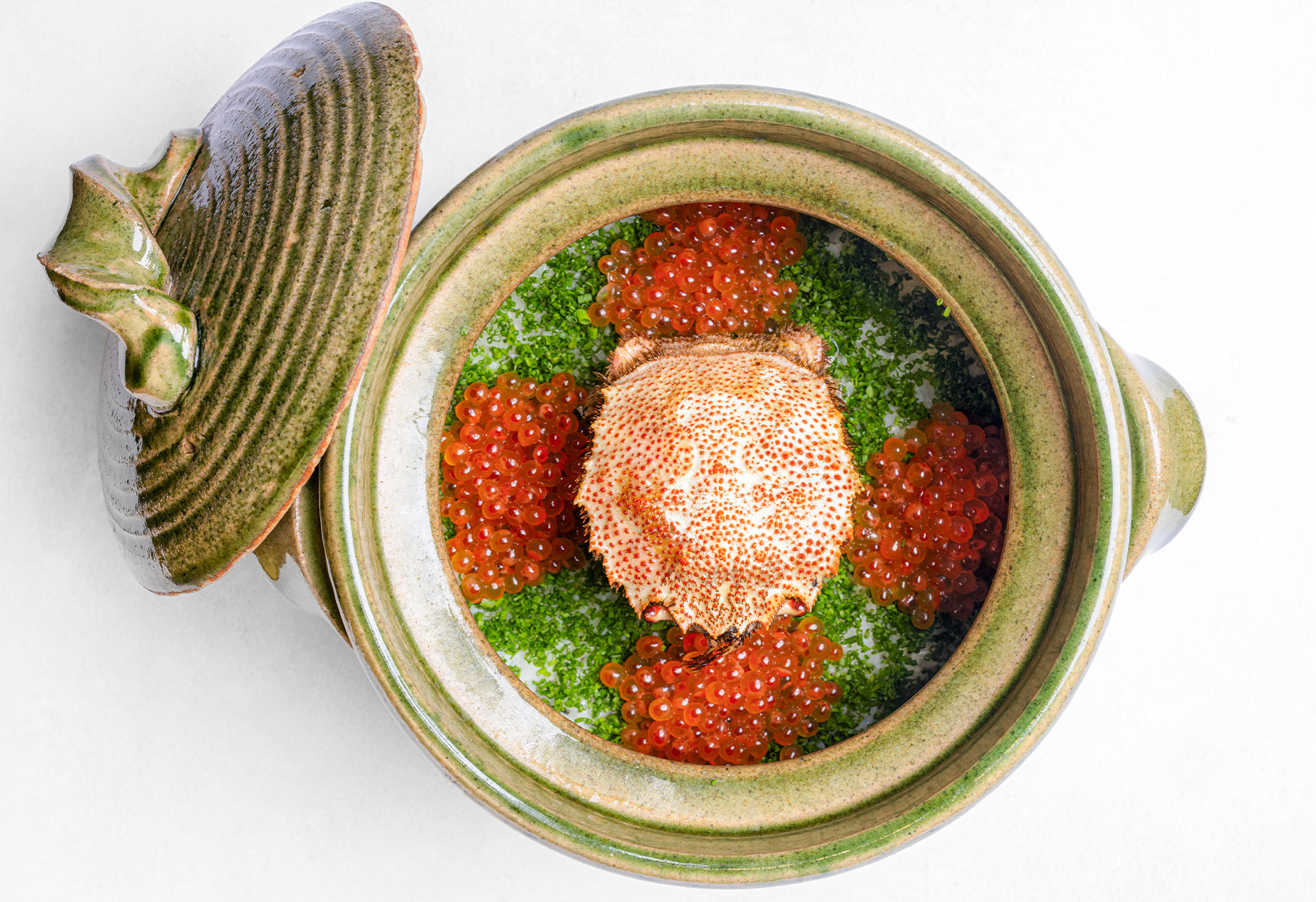
Another speciality is chef’s signature Donabe Rice, the fluffy grains cooked in a traditional Japanese earthenware pot. He uses ikura, cured in his own blend of dashi and soy sauce, seasonal ingredients such as crab – which Tottori is famous for – or unagi in the summer season. This is served with a miso soup, a bold concoction made with the essence of fish bones and other flavourful ingredients. He uses a special rice blend from Sumidaya Shoten in Tokyo, which with his carefully prepared stock, produces a freshly steamed aroma and flavour, a distinctive experience unique to Japanese donabe rice.
With the changing seasons and his childhood memories of the sea and mountain he grew up surrounded by as his sources of inspiration, Chef Takayama allows his creativity to flow. Beyond taste alone, he crafts a sensory experience, inviting diners to interact with the dish to discover what it holds within.
For instance, a recent seasonal course hid three appetisers in plain sight: a playful peanut-shaped monaka filled with foie gras as an ode to the peanuts traditionally served in Singaporean Chinese restaurants; sudachi with caviar and amaebi; and a seasonal fish with sushi rice bundled up in a leaf. The vegetables, too, change according to the season. His Trio of Sashimi, too, reveals a different expression of the sea with each slice. This is served on three individual plates with accompaniments tailored to the character of each fish, offering a gentle journey through the changing seasons.
A recent hotpot offering spotlighted abalone from Mie prefecture, which has a long-standing tradition of ama divers harvesting them. Deriving all the natural flavours from the abalone, he paired this with eggplant and the abalone’s own liver – even using the abalone’s teeth, with a crunchy texture akin to chicken cartilage. Even the water used is key, with Chef Takayama using only natural water from Wakayama and selected kelp, so that the abalone can reveal its pure, oceanic umami.
Attention to detail also goes into the desserts such as Matcha & Hojicha Financier, a homemade confection crafted with matcha and hojicha from the famous Inoue Seikien in Tottori. Savor the rich aroma and gentle sweetness as the perfect conclusion to your meal.
Exclusive Sake, Extensive Wine Collection
It is only at Ki-sho where you will find a special sake not available anywhere else – not even in Japan – the Eiheiji Hakuryu Sake from Yoshida Brewery. It was born out of a conversation between Chef Takayama and Yoshida Mako, the second daughter of Fukui’s groundbreaking’s sake maker, the late Mr Yoshida Tomohiko who became the first sake maker to successfully grow Yamadanishiki rice despite the prefecture’s chilly temperatures. The seventh-generation owner and female master brewer took over the family brewery as its sake master (toji) at just 24 years old in 2017 – becoming Japan’s youngest toji – continuing her father’s legacy and also a rare female leader in what remains a traditionally male-dominated industry. The Eiheiji Hakuryu Sake is made only from Yoshida’s own Yamadanishiki rice, and brewed only with the purest, natural water from the pristine rivers in the spiritual Eiheiji town in Fukui where they are located.
Ki-sho’s other sakes, shochus and even umeshu come from all over Japan, hailing from 23 prefectures and counting. From Mine city in Yamaguchi, there’s Ohmine 2 Grains, a meticulously brewed sake with a fruity aroma and complex finish from the pioneering brand that ceased operations in 1955 but was revived in 2010. There are also the Iwa 5 Assemblage bottles from Toyama, a technique where different sake components are blended to create a complex and harmonious product each year, a concept borrowed from champagne making. Meanwhile, premium sakes include the famous Juyondai from Yamagata, and the rare Reikyo Absolute Zero 2021 which achieves a record-breaking rice polishing ratio of less than 1% (0.85%) to produce a smooth and elegant flavor profile with subtle grape and strawberry notes, the epitome of ultimate clarity, purity, and luxury. There’s also the uncommon Dabada Shochu from Kochi, which is made with 50% chestnuts; as well as the Ki-sho exclusive Chef’s Umeshu, personally made by Chef Takayama himself, in limited quantities.
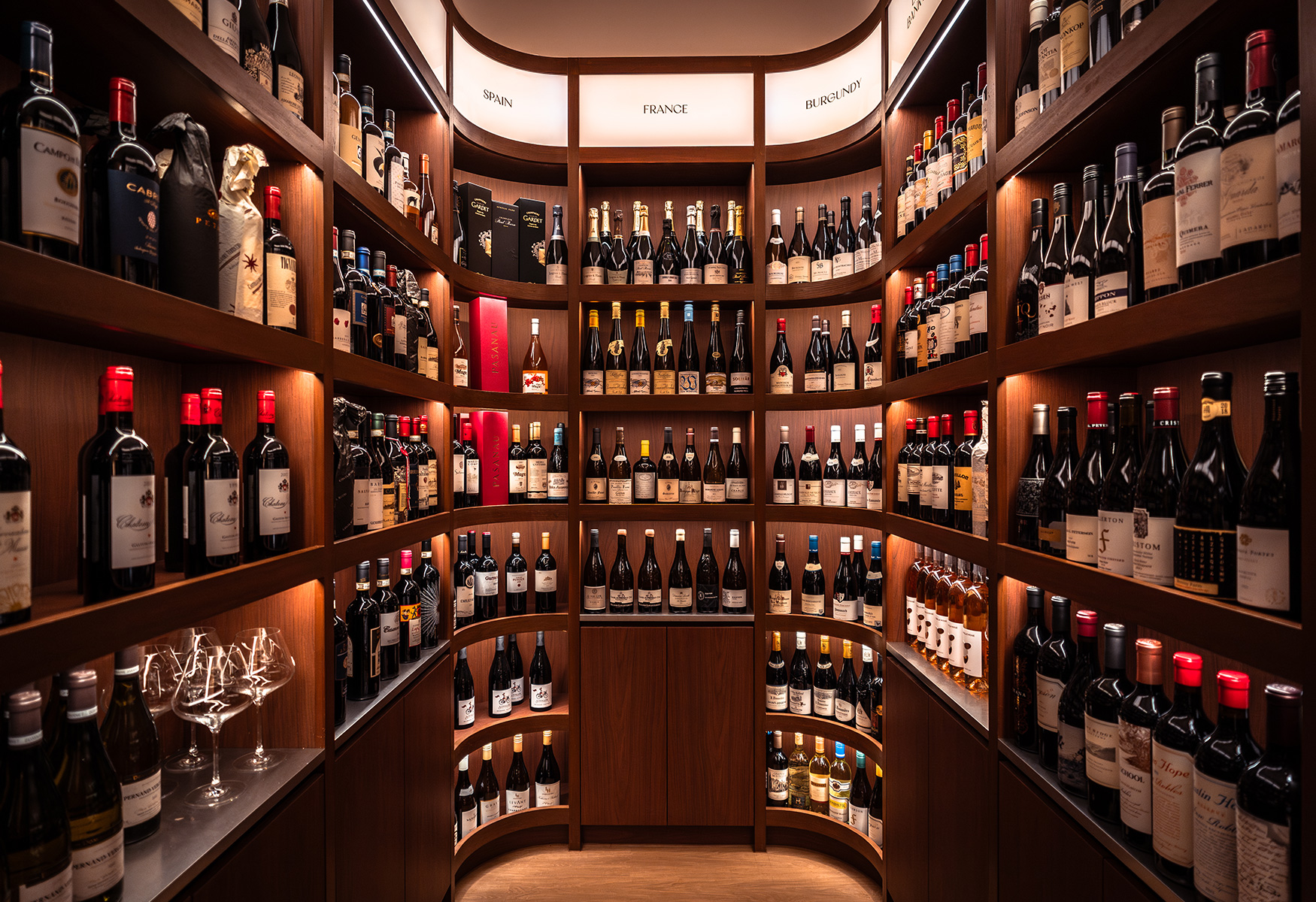
Meanwhile, Ki-sho’s wine collection features over a staggering 300 labels, also sharing Buona Terra’s eye-popping collection of over 250 labels including vintages and limited bottles that are rarely available commercially. Both Ki-sho and Buona Terra are in the same colonial-era black-and-white bungalow on Scotts Road. You will find the coveted Domaine de la Romanée-Conti (DRC) allocation here, with bottles starting from $900.
This is Singapore’s most extensive wine collection offered by a Japanese restaurant – over 300 curated labels in all. Among the highlights are rare ex-château allocations spanning prestigious houses, boutique vineyards, and special allocation bottles rarely seen outside of private cellars.
Domaine de la Romanée-Conti Ex-Château Allocation for Ki-sho
- Domaine de la Romanée-Conti Vosne-Romanée 1er Cru Cuvée Duvault-Blochet 2021, $950
- Domaine de la Romanée Conti La Tâche Grand Cru 2017, $6900
- Domaine de la Romanée Conti Richebourg Grand Cru 2017, $4400
- Domaine de la Romanée Conti Romanée-St-Vivant Grand Cru 2017, $4200
Domaine Armand Rousseau Ex-Château Allocation for Ki-sho
- Domaine Armand Rousseau Père et Fils Chambertin Grand Cru 2019, $3750
- Domaine Armand Rousseau Père et Fils Chambertin-Clos de Bèze Grand Cru 2019, $3750
Other Burgundy Allocation:
- Domaine Romonet, Cecile Tremblay, Domaine Prieuré Roch, Antonio Quari, Arnaud Lopez’s
Champagne Allocation
- Jacques Selosses
- Ulysse Collin
- Vouette & Sorbée
RARE JAPANESE WINE ALLOCATION
- Beau Paysage from Yamanashi
- Domaine Takahiko
These bottles, typically privately accessible only to collectors and connoisseurs, are now being poured for guests exclusively at Ki-sho in limited quantities – creating an unmatched dining experience where kappo cuisine meets some of the world’s most coveted wines.